Skip to content
SEM ROI
Case study · Client-side product management

Two build partners, one product owner

A resort group rebuilt its website and guest app with two partners. We run product ownership on the group's side, so brief, decisions and scope stay in one place.

Client
Multi-brand resort group (name withheld)
Sector
Hospitality · multi-brand portfolio
Market
Mediterranean · international guests
Timeline
2026 – ongoing
Our role
Client-side product management and product ownership for web, app and digital assets across the group's brands
  • Product management
  • Product ownership
  • Multi-vendor delivery
  • Discovery
  • Platform architecture
  • AI-assisted ops
brands, one owner for web, app and digital assets
4
workstreams: website, guest app, operations system
3
delivery partners briefed through one product layer
2
decision log, every open question with an owner
1

Engagement scope as of October 2026. Delivery metrics will be added after go-live.

The challenge

One rebuild, many partners and departments

Website, guest app and back-end systems, built by two partners for departments with their own priorities. Someone on the client's side had to make it one product.

What we had to deliver
  • Turn input from every department into one priority listDone
  • Settle the platform direction before build was pricedDone
  • Keep both partners working from one version of scopeOngoing
  • Leave the group able to run its own content after launchIn progress
  • Design and build in different companies

    The app is designed by one partner and built by another. Every handoff is a place where a feature can fall between contracts and go unpriced.

  • A brief written before the constraints were known

    Requirements were written before the platform limits were clear, so some items had to be rewritten before a partner could price them.

  • Every department had a different first priority

    Each department had a strong case of its own, and not all of them pointed the same way.

  • Platforms that set the limits

    The booking engine and other third-party systems each limit what the new front end can promise guests.


What we did

Six workstreams, run as one product practice

We reviewed the brief before partners priced it, built one evidence base, and took each constraint to the people who could decide on it.

Program sequence2026 – ongoing

Sequence only. Dates are kept out of this case study.

  1. Brief reviewBefore contract

    Requirements checked before anyone priced them

    • A line-by-line review of the app and web requirements: gaps, ambiguities and items that needed a decision first.
    • Coverage checked for what a native app needs: privacy and consent, localisation, notifications, data migration.
    • Items no partner could price as written were rewritten or split before the contract referenced them.

    OutcomeScope questions answered before signature, not in change requests.

  2. DiscoveryOngoing

    One evidence base for both partners

    • Interviews with each department and a structured survey of hotel management teams across the brands.
    • A user research plan built around how guests decide and book, not around complaints about the current interface.
    • Findings labelled by confidence, so an early signal is never presented as a settled result.

    OutcomeBoth partners design from the same findings.

  3. Design governance

    Feedback from many sources, one register

    • Design feedback from departments, hotel teams and leadership consolidated into a single register.
    • Conflicts and dependencies surfaced, not averaged out.
    • Every item classified as Design, Additional work or Decision pending, with critical items anchored to the stakeholder's original wording.

    OutcomeEach change request traceable to its source.

  4. Architecture decisions

    Constraints taken to the people who can change them

    • Third-party platform limits documented before they turned into design problems.
    • A joint session with the group's IT team and both partners: platform direction agreed, with the reasoning recorded.
    • Open questions logged, each with an owner and the forum that decides it.

    OutcomePlatform direction agreed before build scoping.

  5. Partner alignmentOngoing

    Two partners, one version of scope

    • Each decision recorded once, with its owner and reasoning, and shared with partners as agreed scope.
    • A design-to-development handoff spec owned jointly by both partners, covering what moves between web and app.
    • Requests outside the agreed scope recorded and held for a later phase rather than absorbed.

    OutcomePartners work from the same, settled scope.

  6. Operating modelIn progress

    The group owns its stack; partners work inside it

    • Hosting, environments and code repositories set up in the group's own accounts, with partner access.
    • Platform and CMS lifecycle planned into the roadmap, not left to chance.
    • Post-launch content and routine updates planned in-house, with AI assistance inside the CMS.

    OutcomeLess dependence on any one partner after launch.

Program sequence2026 – ongoing
01Brief reviewBefore contract

Requirements checked before anyone priced them

  • A line-by-line review of the app and web requirements: gaps, ambiguities and items that needed a decision first.
  • Coverage checked for what a native app needs: privacy and consent, localisation, notifications, data migration.
  • Items no partner could price as written were rewritten or split before the contract referenced them.

OutcomeScope questions answered before signature, not in change requests.

02DiscoveryOngoing

One evidence base for both partners

  • Interviews with each department and a structured survey of hotel management teams across the brands.
  • A user research plan built around how guests decide and book, not around complaints about the current interface.
  • Findings labelled by confidence, so an early signal is never presented as a settled result.

OutcomeBoth partners design from the same findings.

03Design governance

Feedback from many sources, one register

  • Design feedback from departments, hotel teams and leadership consolidated into a single register.
  • Conflicts and dependencies surfaced, not averaged out.
  • Every item classified as Design, Additional work or Decision pending, with critical items anchored to the stakeholder's original wording.

OutcomeEach change request traceable to its source.

04Architecture decisions

Constraints taken to the people who can change them

  • Third-party platform limits documented before they turned into design problems.
  • A joint session with the group's IT team and both partners: platform direction agreed, with the reasoning recorded.
  • Open questions logged, each with an owner and the forum that decides it.

OutcomePlatform direction agreed before build scoping.

05Partner alignmentOngoing

Two partners, one version of scope

  • Each decision recorded once, with its owner and reasoning, and shared with partners as agreed scope.
  • A design-to-development handoff spec owned jointly by both partners, covering what moves between web and app.
  • Requests outside the agreed scope recorded and held for a later phase rather than absorbed.

OutcomePartners work from the same, settled scope.

06Operating modelIn progress

The group owns its stack; partners work inside it

  • Hosting, environments and code repositories set up in the group's own accounts, with partner access.
  • Platform and CMS lifecycle planned into the roadmap, not left to chance.
  • Post-launch content and routine updates planned in-house, with AI assistance inside the CMS.

OutcomeLess dependence on any one partner after launch.

How we work

Where every request goes

Requests come from departments, hotel teams, leadership and both partners. Each passes through the same product layer before it reaches a partner.

Inputs
  • Departments
  • Hotel teams
  • Leadership
  • Partners
  • Guest research
Product layer · client side
  1. Consolidate
  2. Check against source
  3. Classify
Outputs
  • Designdesign partner
  • Additional workpriced as a change, or held for a later phase
  • Decision pendingthe right forum (IT, revenue, leadership), with an owner
  • Platform constraintarchitecture decision log

One route for every request. Nothing reaches a partner without a classification and a source.

Across the portfolio

One product owner across four brands

Four brands, different guests, one portfolio. Decisions are settled once where the brands share and kept apart where they differ.

  • Brand A
  • Brand B
  • Brand C
  • Brand D
Hosting · security · analytics · CMS
  1. Decided once, applied across brands

    Hosting, security, analytics and CMS choices are made at group level, so each brand doesn't repeat the same evaluation.

  2. Each brand keeps its own position

    Shared components and standards sit underneath; tone, content and guest experience stay with the brand.

  3. Lessons carried forward

    What one brand's project teaches about partners, platforms and content goes into the next brief.

  4. Support scoped from real history

    Maintenance and support needs are estimated from what the existing sites actually required, not from a generic retainer.

Before & after

How the program runs now

AreaBeforeNow
FeedbackEach department talked to partners directlyOne register, classified and sourced
ConstraintsFound during designTaken to decision makers first
DecisionsMade in meetings, remembered differentlyLogged with an owner and the reasoning
Scope changesHandled case by caseLogged, priced or held for later
Content after launchA ticket to the partnerIn-house, AI-assistedplanned
  • Feedback

    Now: One register, classified and sourced

    Before: Each department talked to partners directly

  • Constraints

    Now: Taken to decision makers first

    Before: Found during design

  • Decisions

    Now: Logged with an owner and the reasoning

    Before: Made in meetings, remembered differently

  • Scope changes

    Now: Logged, priced or held for later

    Before: Handled case by case

  • Content after launch

    Now: In-house, AI-assistedplanned

    Before: A ticket to the partner

What we learned

  1. The risk sits between the partners

    Neither partner was the problem. The features nobody owned were. Mapping every handoff early showed where scope would otherwise have gone unpriced.

  2. Take a constraint to the people who can change it

    When a feature guests want depends on what a third-party platform allows, the answer isn't a cleverer design. It's a decision for the people who own that platform and its commercial terms, so that's where we take it.

  3. AI speeds up consolidation; sources keep it honest

    Summaries drift. A note that said one thing could be paraphrased into a stronger claim. We use AI to consolidate at scale and anchor every critical item to the stakeholder's own words.

Running a program with several partners?

Tell us what you're building and who's building it. We'll show you where the gaps are likely to be and how we'd run the product side.

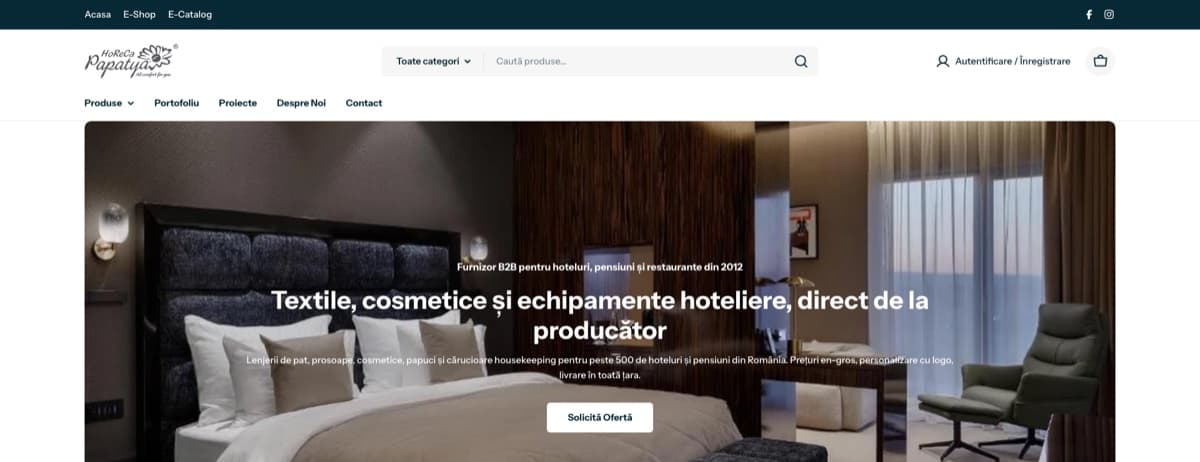
The new Horeca Papatya homepage on Shopify
Next case study · Hospitality supply
Horeca Papatya: half of online revenue from Google